In many industries, a small component can have a major impact on system performance. The Silicone Rubber Tube is one such product. Although it looks simple, silicone tubing plays an important role in fluid transfer, protection, insulation, and sealing applications across medical, food, chemical, laboratory, automotive, and industrial fields.
Compared with traditional rubber or plastic tubes, silicone rubber tubes offer unique advantages, including temperature resistance, flexibility, chemical stability, and long service life. These characteristics make them suitable for environments where ordinary materials may fail.
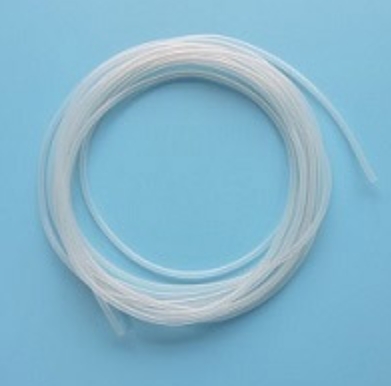
What Is a Silicone Rubber Tube?
A
Silicone Rubber Tube is a flexible tubular product made from silicone elastomer, a synthetic material based on silicon, oxygen, carbon, and hydrogen.
Its molecular structure gives it excellent stability under different environmental conditions.
A typical silicone rubber tube has features such as:
Smooth inner surface
Flexible structure
High temperature resistance
Good elasticity
Low odor and non-toxic characteristics
Depending on the application, silicone tubes can be produced in different forms, including:
|
Type
|
Main Characteristics
|
|
Standard Silicone Tube
|
General-purpose tubing for industrial applications
|
|
Medical Grade Silicone Tube
|
Designed for healthcare and laboratory applications
|
|
Food Grade Silicone Tube
|
Suitable for food and beverage contact applications
|
|
Reinforced Silicone Tube
|
Provides higher pressure resistance with reinforcement layers
|
|
High Temperature Silicone Tube
|
Used in demanding thermal environments
|
Why Silicone Rubber Tubes Are Different from Traditional Tubes
Many conventional tubes are made from materials such as PVC, rubber, or polyethylene. While these materials have their own advantages, silicone offers a different performance balance.
Key advantages include:
-
Wide Temperature Range: Silicone can maintain flexibility in both high and low temperature environments.
-
Excellent Elasticity: The material can repeatedly compress and return to its original shape.
-
Chemical Stability: Silicone shows good resistance against many chemicals and environmental factors.
-
Low Aging Rate: It remains stable under exposure to weather, ozone, and UV conditions.
These properties make silicone tubing suitable for applications where reliability is more important than simple cost.
An Industry Secret: Silicone Tube Performance Depends on Formulation
Many people assume all silicone tubes are the same because they look similar. However, silicone tubing performance can vary significantly depending on material formulation.
Manufacturers adjust silicone compounds by controlling:
Silicone polymer quality
Reinforcing fillers
Curing methods
Additives
These factors influence:
Hardness
Tensile strength
Transparency
Compression resistance
Temperature performance
For example, a medical silicone tube and an industrial silicone tube may use different formulations even though their appearance is similar.
Manufacturing Process Behind Silicone Rubber Tubes
Producing a high-quality silicone tube involves several important steps.
Material Mixing
Silicone raw materials are mixed with specific additives to achieve required performance characteristics.
Extrusion Molding
The silicone compound is pushed through an extrusion die to create a continuous tube shape.
The extrusion process determines:
Tube diameter accuracy
Wall thickness consistency
Surface smoothness
Curing Process
The tube structure is stabilized through curing, which gives silicone its final elasticity and mechanical properties.
Common curing methods include:
Heat curing
Platinum curing
Peroxide curing
Quality Inspection
Industrial silicone tubes may undergo testing for:
Dimensional accuracy
Tensile strength
Hardness
Pressure resistance
Cleanliness requirements
Common Applications of Silicone Rubber Tubes
Medical and Healthcare Industry
Medical-grade silicone tubes are widely used because silicone is flexible and suitable for sensitive applications.
Examples include:
Medical equipment connections
Laboratory tubing
Fluid transfer systems
Food and Beverage Industry
Food-grade silicone tubes are used in:
Beverage equipment
Food processing machines
Dispensing systems
Their smooth surface helps reduce residue buildup.
Laboratory and Chemical Applications
Silicone tubing is commonly used in laboratories because of its flexibility and resistance to many environmental conditions.
Applications include:
Sampling systems
Pump tubing
Research equipment
Industrial Equipment
Industrial silicone tubes are used for:
Air transfer
Cooling systems
Protective insulation
Mechanical connections
The Hidden Challenge: Balancing Flexibility and Strength
One of the biggest challenges in silicone tube design is balancing softness and durability.
A softer tube provides:
Better flexibility
Easier installation
Improved bending performance
However, excessive softness may reduce:
Pressure resistance
Mechanical strength
Service life
Therefore, manufacturers need to optimize silicone hardness and structure according to the final application.
Future Development Trends of Silicone Rubber Tubes
Higher Performance Materials
Future silicone tubing development will focus on improving:
Heat resistance
Chemical resistance
Mechanical durability
Medical and Clean Applications Growth
As healthcare and biotechnology industries expand, demand for high-purity silicone tubes is expected to increase.
More Sustainable Manufacturing
Manufacturers are exploring:
Cleaner production processes
Reduced waste
Longer-lasting silicone products
to improve overall environmental performance.
Conclusion: Silicone Rubber Tubes Support Many Critical Systems
A Silicone Rubber Tube may appear to be a simple flexible component, but its role in modern industries is far more important than its size suggests.
Through advanced material technology and precise manufacturing processes, silicone tubing provides reliable solutions for fluid transfer, insulation, sealing, and protection.
From medical equipment and food processing to industrial machinery, silicone rubber tubes continue to support safer and more efficient systems across the world.