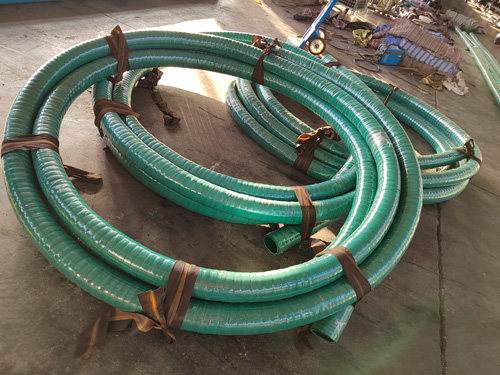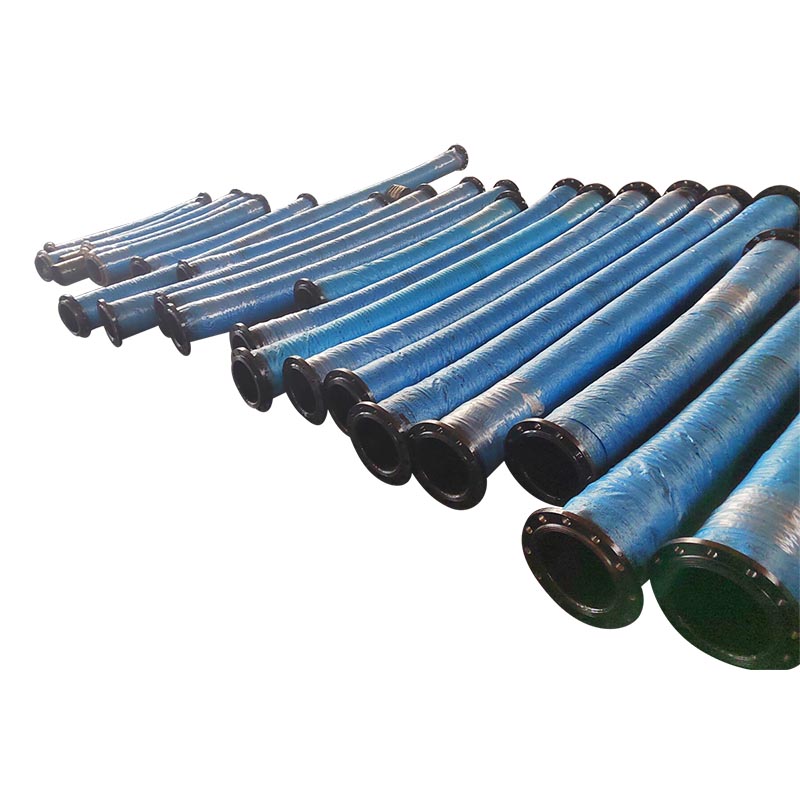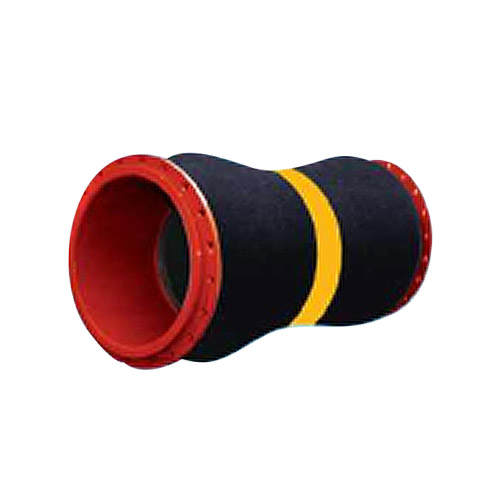

Fushuo Large Diameter Rubber Tube solutions highlight a growing industry discussion: how different piping materials respond to vibration, movement, and temperature changes during long-term operation. In many industrial systems, choosing between flexible rubber tubing and rigid metal pipes depends not only on pressure requirements but also on how the pipeline behaves under continuous stress.
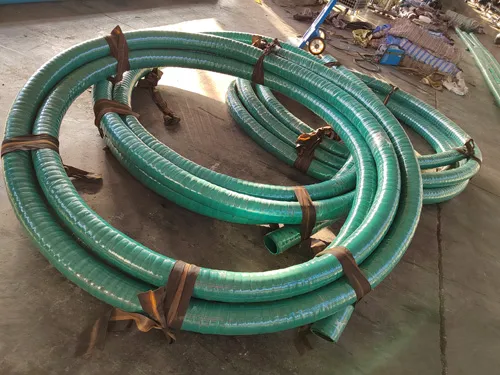
Industrial pipelines rarely operate in completely stable conditions. Pumps, compressors, engines, hydraulic equipment, and mechanical systems can generate constant vibration. Over time, these small movements may loosen connections, create fatigue points, or accelerate wear in rigid piping systems.
Metal pipes are widely used because of their strength and ability to handle high temperatures and pressures. However, their rigid structure limits movement absorption. When equipment vibration transfers directly into the pipeline, stress often concentrates around joints, bends, and connection points.
Rubber tubes work differently. Their flexible structure allows them to absorb a certain amount of mechanical movement and reduce vibration transmission between connected components. This makes flexible piping options useful in systems where equipment movement and pipeline stability must be considered together.
Temperature changes are another challenge in industrial piping. Materials expand when heated and contract when cooled. The amount of movement may seem small, but in long pipeline systems, repeated expansion and contraction can create significant stress.
Metal pipes generally require expansion joints, loops, or compensators to manage thermal movement. Without proper design, repeated temperature cycles may lead to deformation or stress concentration.
Rubber materials naturally provide flexibility. A Large Diameter Rubber Tube can accommodate certain levels of expansion, contraction, and displacement without requiring complex additional structures in some applications.
| Comparison Factor | Rubber Tube | Metal Pipe |
|---|---|---|
| Vibration absorption | High flexibility helps reduce vibration transfer | Limited due to rigid structure |
| Thermal movement | Can absorb small displacement caused by temperature changes | Requires expansion solutions in many systems |
| Installation flexibility | Easier for complex connections and equipment movement | Requires precise alignment |
| Pressure resistance | Depends on reinforcement structure and design | Generally suitable for very high-pressure applications |
| Maintenance considerations | Reduces stress on connected equipment in suitable applications | Requires inspection of joints and stress points |
Many industrial environments combine several challenges at the same time: vibration, temperature variation, chemical exposure, and mechanical movement. In these situations, a rigid pipe may solve one problem while creating another.
For example, pumps connected directly to pipelines often produce continuous vibration. A flexible connection between the equipment and the pipeline can reduce the amount of vibration transferred throughout the system.
Rubber tubes can also help in applications where installation space is limited. Their flexibility allows easier routing around equipment and structural obstacles compared with fully rigid piping arrangements.
Hebei Fushuo Metal Rubber and Plastic Technology Co., Ltd., established in 2001, focuses on rubber and plastic products including rubber tubes, soft connections, and pipe compensators. The company produces various industrial hose products with different material structures for applications involving air, water, oil, chemical media, and mechanical equipment.
Large diameter applications often require more than simply increasing the size of a standard hose. The structure must consider pressure requirements, reinforcement layers, working environment, and connection methods.
A typical large-diameter rubber tube may include reinforced fabric layers or steel wire structures to improve pressure resistance while maintaining flexibility. This combination allows the tube to handle movement while supporting industrial operating conditions.
Key factors that influence performance include:
The internal reinforcement layer affects pressure capacity and shape stability. Steel wire spiral reinforcement, fabric reinforcement, or customized structures are selected according to different operating requirements.
Different industrial media require different rubber formulations. Oil-resistant, acid and alkali-resistant, high-temperature-resistant, and wear-resistant rubber materials are commonly selected based on the working environment.
Even a well-designed tube needs suitable connection methods. Proper installation helps prevent unnecessary stress at joints and improves service stability.
The choice between rubber and metal is not about replacing one material with another in every situation. Each has specific advantages.
Metal piping remains important for systems requiring extremely high pressure, high temperature resistance, or structural rigidity. However, industries dealing with frequent vibration, equipment movement, or thermal cycling often evaluate flexible solutions because reducing mechanical stress can help improve overall system reliability.
Applications such as industrial machinery, hydraulic systems, water treatment equipment, chemical processing lines, and ventilation systems often require pipeline components that can adapt to real operating conditions rather than only static design conditions.
Modern pipeline design increasingly considers the entire operating environment instead of focusing only on material strength. Factors such as vibration control, installation convenience, maintenance frequency, and equipment protection are becoming important parts of system planning.
Flexible components such as rubber tubes and pipe compensators provide additional options for handling movement-related challenges. The right selection depends on pressure, temperature, media type, and the specific working conditions.
In conclusion, metal pipes and flexible rubber solutions each have their own role in industrial applications. When vibration and thermal movement are major concerns, products such as the Large Diameter Rubber Tube from Hebei Fushuo Metal Rubber and Plastic Technology Co., Ltd. demonstrate how flexible pipeline technology can support more adaptable industrial systems.